A carpet, a handwoven rug, an upholstered chair, a hardwood floor and a natural-stone surface may all collect soil and show wear.
That does not mean they should be cared for in the same way.
Professional property care begins by understanding the material in front of us. The right question is not, “Which machine do we use every time?” The right question is, “What does this surface need?”
The Material Comes Before the Method
Before recommending a cleaning approach, a trained professional considers several factors.
Material and construction
Carpet fibers behave differently from upholstery fabric. A machine-made area rug may require a different plan than a handmade or antique rug. Natural stone, sealed tile, hardwood and grout each respond differently to moisture, agitation and cleaning products.
Condition
Normal soil, a recurring spot, worn fibers, loose seams, dye instability, previous repairs and surface damage can change what is appropriate—and what result is realistic.
Use and location
A family room with pets and daily foot traffic has different priorities than a lightly used guest room or a commercial hallway. Access, furniture, ventilation and the way the space must remain in use can also affect the plan.
Moisture and drying needs
Some methods use more water for deep rinsing. Others are designed around lower moisture and faster drying. Specialty rugs may require controlled washing and drying outside the home.
The customer’s goal
Appearance may be the most visible concern, but it is not always the only one. Odor, a recurring spot, soil, texture, maintenance timing or preparation for a move may be part of the conversation.
The assessment brings these factors together.
Carpet: More Than One Professional Option
Aladdin offers different carpet-cleaning methods because carpet conditions and spaces vary.
Hot-water cleaning can provide a deep, restorative cleaning for heavily soiled carpet. The process uses hot water and a cleaning solution to flush the carpet fibers and extract soil.
Encapsulation cleaning is a lower-moisture approach that can be useful for sticky soils and situations where a faster-drying method is appropriate. The process surrounds soil particles so they can be removed from the carpet.
The recommendation should follow an analysis of the carpet—not a preference for using the same process everywhere.
Area and Oriental Rugs Need Specialty Judgment
An area rug is not simply a removable piece of carpet.
Its fibers, dyes, foundation, fringe, construction, age and previous repairs can affect the safest approach. Valuable or handmade rugs may also carry history and meaning that cannot be replaced.
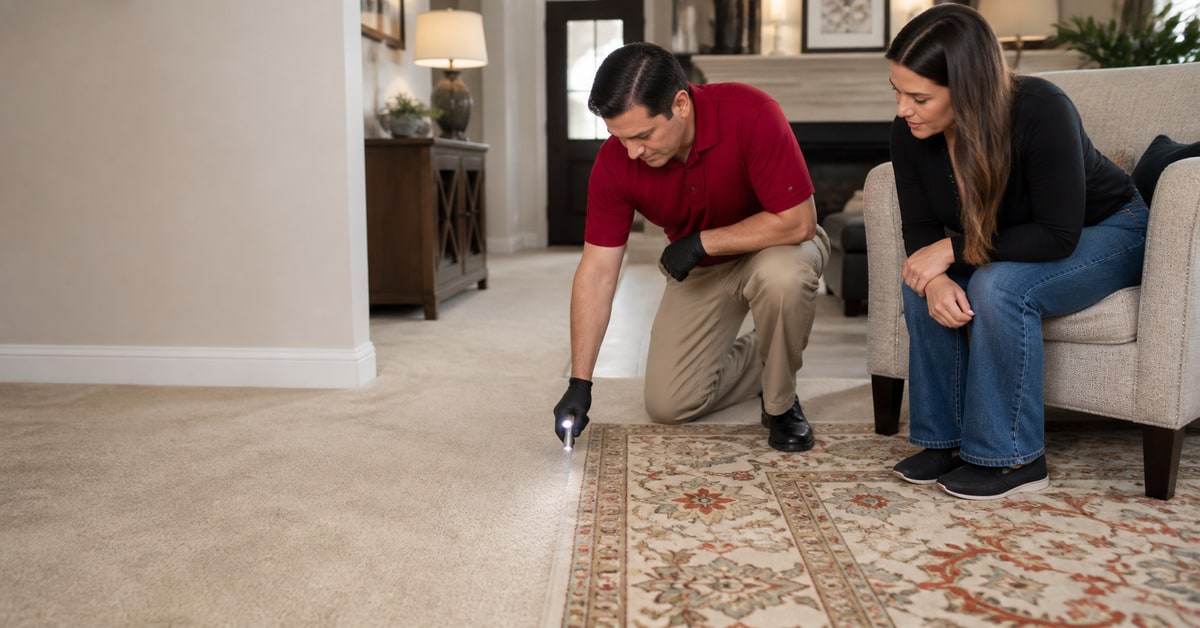
Aladdin’s professional rug-care process begins with a detailed inspection. Rugs are then cared for in a controlled facility through steps that address dry soil, washing, rinsing, moisture removal, drying, grooming and final inspection.
Aladdin operates South Texas’ only fully automated rug-cleaning facility. The process is handled by trained rug-care specialists and is designed to give specialty rugs the controlled care they need.
Upholstery, Wood, Tile and Stone Have Their Own Rules
Upholstery fabrics vary in fiber, construction, color stability and manufacturer guidance. The material should be evaluated before moisture or a cleaning product is introduced.
Wood floors may show residue, wear or finish concerns that cannot be solved by treating the surface like tile.
Tile and grout can collect soil differently, while natural stone may be vulnerable to etching or other damage that looks like dirt but is not removed through ordinary cleaning.
This is why an experienced property-care company should be willing to say when a surface needs a different process, a repair or a more specialized evaluation.
What a Useful Assessment Should Cover
Before work begins, you should understand:
- What material or construction is being evaluated
- Which conditions may affect the result
- What method is recommended and why
- How the surrounding area will be protected
- What preparation is needed from you
- What timing, drying or after-care considerations apply
- Which expectations are realistic
You should also have the opportunity to point out previous treatments, recurring problems or anything particularly valuable or sensitive.
Questions Make the Care Plan Better
If you are not sure what type of carpet, rug, upholstery or floor you have, that is all right. You do not need to arrive with the technical answer.
Start with what you know:
- Where is the concern?
- When did you first notice it?
- Has anything already been used on the area?
- Is the item handmade, antique, repaired or especially valuable to you?
- How is the room or property used?
Those details help a professional choose the right next step.
Let the Surface Lead the Recommendation
The most professional answer is not always the fastest answer. It is the answer that respects the material, explains the reasoning and protects what matters to the customer.
If you would like help evaluating carpet, rugs, upholstery, tile, stone, wood or another part of your property, start with a conversation.
Schedule an assessment online: https://www.aladdincleans.com/locations/schedule-online/ Call Aladdin: 210-736-1821
Recommended Internal Links
- Carpet cleaning methods and process: https://www.aladdincleans.com/residential-services/carpet-cleaning/
- Professional area rug cleaning: https://www.aladdincleans.com/oriental-rugs/rug-cleaning/
- Upholstery cleaning: https://www.aladdincleans.com/residential-services/upholstery-cleaning/
- Tile and grout care: https://www.aladdincleans.com/residential-services/tile-grout-cleaning-repair-services/
- Schedule online: https://www.aladdincleans.com/locations/schedule-online/