Before-and-after photos can make a result easy to see. They can also leave out the information a customer needs most.
The material, starting condition, selected method, documentation and realistic meaning of the result all matter. The five questions below help put those details into context.
A useful result includes context. That context helps customers understand the professional judgment behind the work instead of asking one photograph to tell the entire story.
1. What Material Was Treated?
Carpet, upholstery, area rugs, tile, stone and wood do not respond to care in the same way. Even within one category, fiber, construction, finish and age can change the available options.
A responsible before-and-after example should identify the material at a useful level. “Floor” or “fabric” may be too vague to help you compare the example with your own concern.
If you are considering service, ask whether your material is similar and whether it needs an in-person evaluation.
2. What Was the Starting Condition?
Two surfaces can look equally soiled in a small image while having very different histories.
One may have ordinary traffic soil. Another may include residue from previous products, wear, dye change, damaged fibers or a recurring spot. A photograph alone may not distinguish between soil that can be removed and a permanent change to the material.
Useful context explains what the professional observed before work began. It should also acknowledge any condition that affected the expected result.
3. Which Method Was Selected, and Why?
The method matters because professional care is not one-size-fits-all.
For carpet, Aladdin offers hot-water and lower-moisture carpet-cleaning options. The right option depends on the carpet and the conditions found during an assessment. Specialty area rug care requires a different evaluation and may involve controlled, facility-based cleaning.
A credible result should connect the process to the material and condition. The explanation does not need to be overly technical. It should simply help you understand why the approach made sense.
4. Were the Photos Documented Fairly?
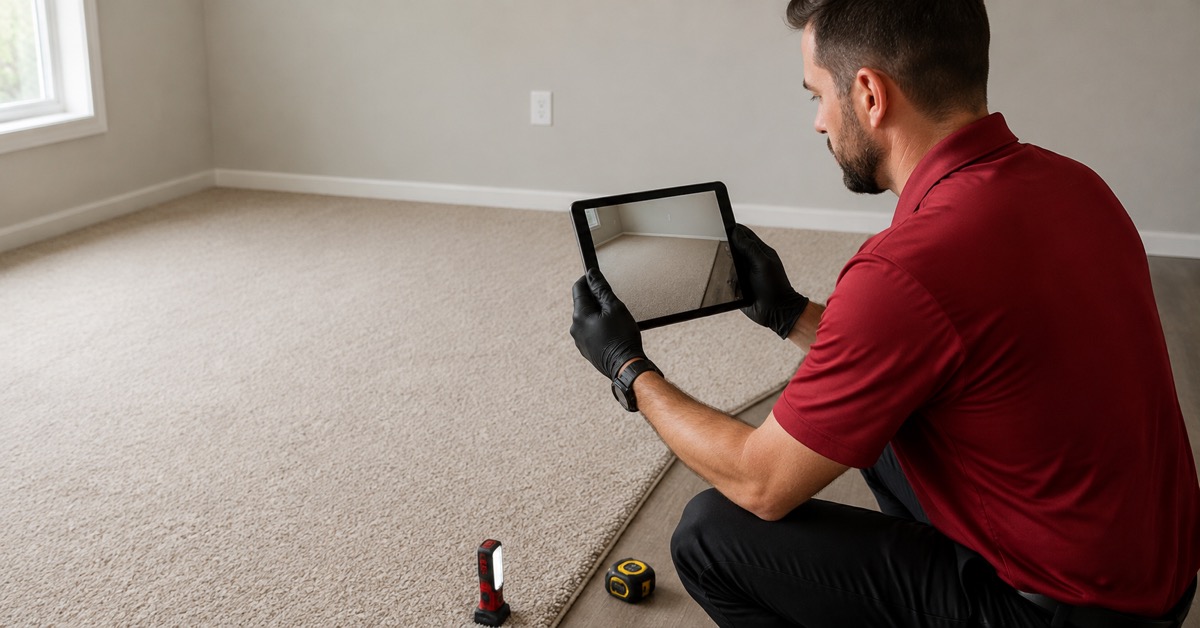
Lighting, camera angle, distance and moisture can all change how a surface appears in a photograph.
Whenever possible, compare images taken from a similar position and under similar lighting. A responsible company should avoid presenting an image in a way that exaggerates the difference.
Permission matters, too. Customer photos and stories should be shared only with approval, and identifying details should be protected.
5. What Does the Example Actually Promise?
One result can show what was possible for one material in one condition. It cannot guarantee the same outcome for every home, rug or surface.
Professional proof should make expectations clearer. It should not replace an inspection or pressure a customer with an extraordinary example.
Listen for language that explains possibilities and limitations. Be cautious when a company relies on guarantees, vague superlatives or dramatic claims without describing the starting condition and process.
What Good Documentation Looks Like
A well-documented cleaning example may include:
- The type of material or surface
- The customer’s original concern
- The condition observed during inspection
- The method selected and the reason for it
- Any limitations discussed before service
- Similar lighting and camera angles
- Confirmation that the customer approved sharing the example
This information turns a photograph into something educational.
Bring the Five Questions to Your Own Assessment
Use the same five-question framework when discussing your own material and condition with a professional. Clear answers are a form of proof. They show that the recommendation is based on the material and condition—not on a generic promise.
What to Share When You Call
Tell us whether your concern involves installed carpet, an area rug or another surface; what happened; when you noticed it; and which products have already been used. Mention your location and any timing needs. A photo can help start the conversation, but it cannot confirm the material, the treatment or the final result on its own.
Discuss Your Carpet or Rug Concern
Tell us what you want evaluated. We can help identify the next step and explain which questions need an inspection before a care plan is confirmed.
Call to discuss your concern: 210-736-1821
Request a service assessment
Serving San Antonio, New Braunfels and Boerne.